0 item(s) in your cart :$ 0
My Account | View Cart
The GoLab homogenized beetle legs in the Bullet Blender Storm for the Biology Department of Loyola University last month, saving countle ...
(Read More)
Next Advance, Inc.
1548 Burden Lake Road
Averill Park, NY 12018, USA
Phone: 1.518.674.3510
in USA 1.800.738.1681
Fax: 1.518.674.0189
info@nextadvance.com
See our capillary column packing kits.
Load your samples into mass spectrometers without transfer loss or contact with metallic surfaces.

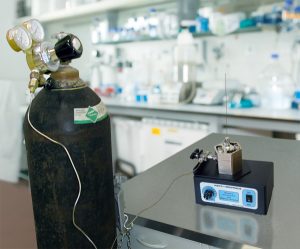
Left: Transparent model- PC1000
Center-front: standard model- PC77
Right: standard model with integrated magnetic stirplate- PC77-MAG
Dr. Austin Yang, University of Maryland


With a transparent body, so you can see the level of packing suspension in the vial. Rated for 1000 psi - sufficient for most column packing applications. $1,395.00

Rated for 2500 psi (17,000 kPa). Includes a three-way valve for convenience. $995.00

With integrated magnetic stirplate, for convenience and perfect alignment, and 5 x 2 mm stirbar. $1,495.00
Orders include an operator's manual, a hex wrench, and 10 additional PTFE ferrules (for 360 to 400 um outside diameter capillaries). Accessories such as tubing, capillary, and frit assemblies are available. (Prices do not include shipping or taxes)
Dr. Qishan Lin, Director of the Proteomics Core Facility The Center for Functional Genomics,
University at Albany, New York
Dr. Steve Mouton, Northrop Grumman Proteomics, Texas
Dr. Kimberly McKinney, Carolinas Medical Center, North Carolina
The Pressure Injection Cell, sometimes called a "bomb loader" enables controlled dispensing of small-volume liquid samples. Using high pressure, the pressure injection cell has proved invaluable for two applications: densely packing nanobore capillary columns with solid-phase particles; and precisely infusing microliter samples directly from microcentrifuge tubes into mass spectrometers without additional transfers, wasted sample, or contact with metallic surfaces which adsorb some negatively charged molecules such as peptides with phospho or carboxy groups.
The Pressure Injection Cell holds 1 mL and 2 mL micro-centrifuge tubes as well as 12 x 32 mm glass vials in its central chamber (as shown at right). The assembly can be used on a typical magnetic stirrer, e.g. to keep particles in suspension. The cell needs to be connected to a bottle/tank of compressed gas, such as Helium or Nitrogen. Packing capillary columns requires several hundred to about 1000 psi or sometimes more, and mass spectrometer injections typically require a few hundred psi. This unit is rated for a 2500 psi. 8500 psi units are available.
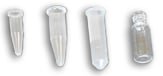
The Pressure Injection Cells accept various sample tubes, including 0.5 mL, 1.5 mL, and 2.0 mL microcentrifuge tubes and 12 mm diameter glass vials.
Why pay hundreds of dollars per packed capillary column for LC/MS? You can pack the columns, of various internal diameters, yourself. The Pressure Injection Cell comes with instructions on how to pack columns and is available as a stand alone unit (with 9 extra ferrules), or as a complete kit with ferrules, 1/8" stainless steel tubing, a spool of capillary, a cleaving tool, and a frit assembly, or as a partial kit.

The Pressure Injection Cell is made with the finest methods and components, thereby enabling you to acquire very accurate data. The high quality stainless steel fittings and valve are made by Swagelok. The body and cap of the pressure chamber are nickel coated. Special features not found elsewhere include a recess in the cap to allow easy access to the sample tube and a hexagonal shape to help align the cap to the body. The Pressure Injection Cell's simple, rugged design and the use of top components ensure years of trouble free use and quality performance. Back to top
With the Pressure Injection Cell, load your sample into a mass spectrometer directly from a microcentrifuge or Eppendorf tube and avoid transfer loss. There is no contact with metallic surfaces which would adsorb negatively charged molecules.
The simple and reliable product design, efficient manufacturing, internet marketing, and our low overhead enable us to sell the Pressure Injection Cells at a price almost 50% less than competitors charge. We don't skimp on quality; we make the best product available. However, we do pass the savings along to our customers. Back to top
The Pressure Injection Cell comes with a 30 day money back guarantee and a 2 year warranty.
Back to top
Operationally, the pressure injection cell is analogous to a straw in a juice box. As you apply pressure in the box, the juice will be forced out through the straw.
Likewise, the pressure injection cell is connected to pressurized gas, typically in a tank. A 0.5 to 2 mL tube containing the sample liquid is placed in the base of the pressure injection cell. A capillary is then placed through the ferrule in the cap and down into the sample tube. When packing a capillary, a frit assembly is placed at the distal end of the capillary to prevent particles from exiting and the entire pressure injection cell is typically placed on a stir plate. By regulating the gas pressure, you can adjust the flow rate of the sample into the capillary.
Sample DataOn the left is a LC/MS chromatogram of a peptide mixture prepared from a tryptic digested gel band, separated by a 5 µm C18 resin packed column (100 µm inside diameter by 10 cm long capillary). The Pressure Injection Cell was used to pack the LC/MS capillary column and to inject the sample into the mass spectrometer. Courtesy of Dr. Qishan Lin.

PC1000 |
PC77 |
PC77-MAG |
|
|
Pressure Rating (psi)
|
1000
|
2500
|
2500
|
|
Integrated magnetic stirplate?
|
No
|
No
|
Yes
|
|
Body Material
|
Acrylic
|
Stainless Steel
|
Stainless Steel
|
|
Transparent?
|
Yes
|
No
|
No
|
What accessories do I need to use Next Advance Pressure Injection Cells?
In order to use a Next Advance Pressure Injection Cell you will need:
To pack capillaries, you will need:
What if I live in a metric country and I want to use my own stainless steel tubing?
You will need to purchase ADPT-3mm1/8 which mounts to the Pressure Injection Cell and accepts 3mm outside diameter tubing.
What if I live in a metric country and I want to use TBNG10 (1/8th inch tubing) and a pressure regulator from my own country?
You will need to purchase ADPT-ISO which threads into ¼ ISO fitting (metric) on the pressure regulator and accepts 1/8th inch tubing.
What if I live in a metric country and I want to purchase the PACK-KIT?
You will need an adapter between their pressurized gas tank and the pressure regulator regulator (HPREG). Every country has its own standards for the fittings on gas tanks, and in some countries it's not even standardized. Customers should tell their local gas tank supplier that our regulators come with a CGA 580 fitting mounted in a 1/4 NPT threaded hole and the supplier can supply the correct fitting or adapter.

Does the Pressure Injection Cell require electrical power?
No. The liquid sample is forced through the capillary using pressurized gas typically supplied by a tank Models with an integrated magnetic stirplate require electricity. They use a small power supply that plugs into a wall outlet. We supply the correct plug for your country.
Which gases can it use?
The choice of gas is not critical. Most customers use inert gases such as helium, nitrogen or argon. Dry air is fine too - if you purchase an adapter, NIP-AIR, to interface the tank with the pressure regulator.
Which adapters do I need?
If you're operating the pressure injection cell with inert gas in the United States or other country using English parts and CGA fittings (580 for inert gases), you do not need any adapters.
If you will use metric stainless steel tubing, you will need an adapter, ADPT-3mm1/8 to mate the 3 mm tubing with the 1/8 inch fitting on the pressure injection cell. This can be factory installed or installed in the field.
If you will use 1/8 inch stainless tubing with a regulator with metric or ISO fittings, you will need the adapter, ADPT-ISOto1/8.
To use our regulator (HPREG) outside of the United States, you may need to purchase an adapter from your local gas supplier; they will know which fitting you will need to mate with our CGA 580 fitting. With multiple standard fittings in many countries and so many different standard fittings, we cannot be certain which fitting you will need.
How much pressure is required?
Loading samples into a capillary for mass spectroscopy typically requires 100 to 400 psi. Packing capillary columns typically requires 500 to 1000 psi.
Do I need a special pressure regulator?
Most pressure regulators for gas cylinders have a maximum working pressure that is too low for packing capillary columns. We sell a higher pressure regulator, model HPREG, that has a working pressure up to 1500 psi, which is ideal for packing standard length capillary columns.
How can you determine the approximate flow rate through a capillary?
If the solution is flowing only through an otherwise empty capillary tube, the flow rate is straightforward to calculate. However, a frit or a packed capillary typically causes much more flow resistance, so it is best to measure the flow rate with a test solution.
To measure the flow rate, run a test solution through a sample capillary and at the outlet place a calibrated micropipette. The solution should wick up the micropipette on its own so you don't need any special fittings to seal them together. For example, Drummond and other brands of micropipettes, available from most laboratory product suppliers, come in 1, 2, 3, 4, 5, 10, 20, ... µl volumes. Using a stopwatch, measure how long it takes from when the solution starts to exit the capillary and begins filling the micropipette until the micropipette is filled.