
Ideal for Cell Culture Homogenization
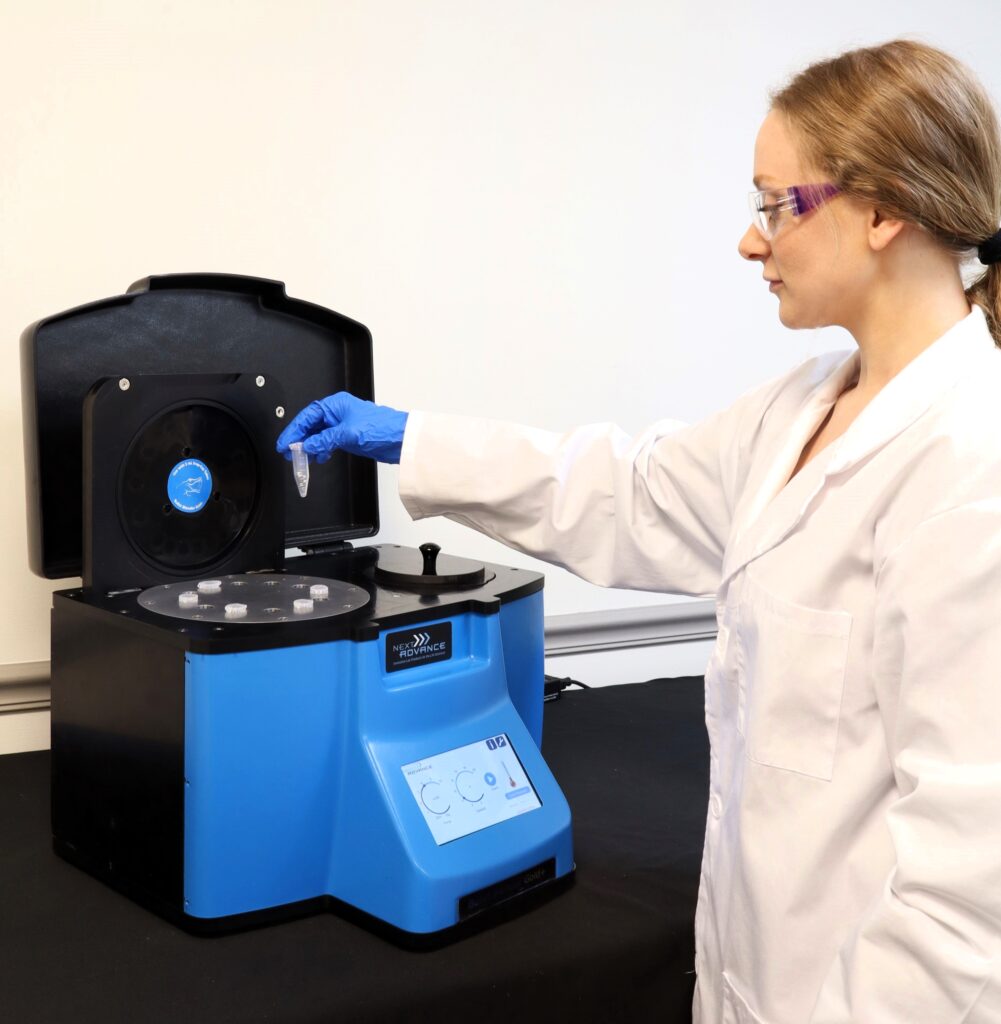
Do you spend lots of time and effort homogenizing cultured cells? The Bullet Blender® tissue homogenizer delivers high quality and superior yields. No other homogenizer comes close to delivering the Bullet Blender’s winning combination of top-quality performance and budget-friendly affordability. See below for a cultured cells homogenization protocol.
Save Time, Effort and Get Superior Results with
The Bullet Blender Homogenizer
Consistent and High Yield Results
Run up to 24 samples at the same time under microprocessor-controlled conditions, ensuring experimental reproducibility and high yield. Process samples from 10mg or less up to 3.5g.No Cross Contamination
No part of the Bullet Blender ever touches the tissue – the sample tubes are kept closed during homogenization. There are no probes to clean between samples.Samples Stay Cool
The Bullet Blenders’ innovative and elegant design provides convective cooling of the samples, so they do not heat up more than several degrees. In fact, our Gold+ models hold the sample temperature to about 4ºC.Easy and Convenient to Use
Just place beads and buffer along with your tissue sample in standard tubes, load tubes directly in the Bullet Blender, select time and speed, and press start.Risk Free Purchase
Thousands of peer-reviewed journal articles attest to the consistency and quality of the Bullet Blender homogenizer. We offer a 2 year warranty, extendable to 4 years, because our Bullet Blenders are reliable and last for many years.Cultured Cells Homogenization Protocol
Sample size |
See the Protocol |
| microcentrifuge tube model (up to 300 mg) | Small cell culture samples |
| 5mL tube model (100mg - 1g) | Medium cell culture samples |
| 50mL tube model (100mg - 3.5g) | Large cell culture samples |
What Else Can You Homogenize? Tough or Soft, No Problem!
The Bullet Blender can process a wide range of samples including organ tissue, cell culture, plant tissue, and small organisms. You can homogenize samples as tough as mouse femur or for gentle applications such as tissue dissociation or organelle isolation.

Want more guidance? Need a quote? Contact us:
Bullet Blender Models


Select Publications using the Bullet Blender to Homogenize Cultured Cells
Yanmaz, İ. G., & Kanlı, A. (2026). EFFECTS OF WILD-TYPE FTO PROTEIN ON ERAD PATHWAY AND PROTEOSTASIS REGULATION IN NEURONAL CELLS. Acta Medica Nicomedia, 9, 1–5. https://doi.org/10.53446/actamednicomedia.1864254
Drack, A., Tran, A. H., Rai, A., Rnjak-Kovacina, J., & Greening, D. (2026). Adhesive silk hydrogel patches for localized and sustained delivery of cell-derived nanovesicles. Bioengineering. https://doi.org/10.64898/2026.05.03.722555
Lee, R. G., Balasubramaniam, S., Stentenbach, M., Kralj, T., McCubbin, T., Padman, B., Smith, J., Riley, L. G., Priyadarshi, A., Peng, L., Nuske, M. R., Webster, R., Peacock, K., Roberts, P., Stark, Z., Lemire, G., Ito, Y. A., Care4Rare Canada Consortium, Boycott, K. M., … Filipovska, A. (2022). Deleterious variants in CRLS1 lead to cardiolipin deficiency and cause an autosomal recessive multi-system mitochondrial disease. Human Molecular Genetics, 31(21), 3597–3612. https://doi.org/10.1093/hmg/ddac040
Zhang, H., Dammer, E. B., Duong, D. M., Danelia, D., Seyfried, N. T., & Yu, D. S. (2022). Quantitative proteomic analysis of the lysine acetylome reveals diverse SIRT2 substrates. Scientific Reports, 12(1), 3822. https://doi.org/10.1038/s41598-022-06793-5
Williams, S. M., Liyu, A. V., Tsai, C.-F., Moore, R. J., Orton, D. J., Chrisler, W. B., Gaffrey, M. J., Liu, T., Smith, R. D., Kelly, R. T., Pasa-Tolic, L., & Zhu, Y. (2020). Automated Coupling of Nanodroplet Sample Preparation with Liquid Chromatography–Mass Spectrometry for High-Throughput Single-Cell Proteomics. Analytical Chemistry, 92(15), 10588–10596. https://doi.org/10.1021/acs.analchem.0c01551
Kmietczyk, V., Riechert, E., Kalinski, L., Boileau, E., Malovrh, E., Malone, B., Gorska, A., Hofmann, C., Varma, E., Jürgensen, L., Kamuf-Schenk, V., Altmüller, J., Tappu, R., Busch, M., Most, P., Katus, H. A., Dieterich, C., & Völkers, M. (2019). m6A-mRNA methylation regulates cardiac gene expression and cellular growth. Life Science Alliance, 2(2). https://doi.org/10.26508/lsa.201800233
Booth, J. S., Goldberg, E., Patil, S. A., Barnes, R. S., Greenwald, B. D., & Sztein, M. B. (2019). Effect of the live oral attenuated typhoid vaccine, Ty21a, on systemic and terminal ileum mucosal CD4+ T memory responses in humans. International Immunology, 31(2), 101–116. https://doi.org/10.1093/intimm/dxy070
Diaz Marin, R., Crespo-Garcia, S., Wilson, A. M., & Sapieha, P. (2019). RELi protocol: Optimization for protein extraction from white, brown and beige adipose tissues. MethodsX, 6, 918–928. https://doi.org/10.1016/j.mex.2019.04.010
Becker, K., Wang, X., Vander Stel, K., Chu, Y., Kordower, J., & Ma, J. (2018). Detecting Alpha Synuclein Seeding Activity in Formaldehyde-Fixed MSA Patient Tissue by PMCA. Molecular Neurobiology, 55(11), 8728–8737. https://doi.org/10.1007/s12035-018-1007-y
Rasool, A., Ahmed, M. S., & Li, C. (2016). Overproduction of squalene synergistically downregulates ethanol production in Saccharomyces cerevisiae. Chemical Engineering Science, 152, 370–380. https://doi.org/10.1016/j.ces.2016.06.014
Orgil, O., Mor, H., Matityahu, A., & Onn, I. (2016). Identification of a region in the coiled-coil domain of Smc3 that is essential for cohesin activity. Nucleic Acids Research, gkw539. https://doi.org/10.1093/nar/gkw539
Shwartz, M., Matityahu, A., & Onn, I. (2016). Identification of Functional Domains in the Cohesin Loader Subunit Scc4 by a Random Insertion/Dominant Negative Screen. G3: Genes|Genomes|Genetics, g3.116.031674. https://doi.org/10.1534/g3.116.031674
Zheng, Y., Xie, J., Huang, X., Dong, J., Park, M. S., & Chan, W. K. (2016). Binding studies using Pichia pastoris expressed human aryl hydrocarbon receptor and aryl hydrocarbon receptor nuclear translocator proteins. Protein Expression and Purification, 122, 72–81. https://doi.org/10.1016/j.pep.2016.02.011
Mashock, M. J. (2016). Examining mechanism of toxicity of copper oxide nanoparticles to Saccharomyces cerevisiae and Caenorhabditis elegans. Marquette University.
Thapa, H. R., Naik, M. T., Okada, S., Takada, K., Molnár, I., Xu, Y., & Devarenne, T. P. (2016). A squalene synthase-like enzyme initiates production of tetraterpenoid hydrocarbons in Botryococcus braunii Race L. Nature Communications, 7, 11198. https://doi.org/10.1038/ncomms11198
Otwell, A. E., Callister, S. J., Zink, E. M., Smith, R. D., & Richardson, R. E. (2016). Comparative Proteomic Analysis of Desulfotomaculum reducens MI-1: Insights into the Metabolic Versatility of a Gram-Positive Sulfate- and Metal-Reducing Bacterium. Frontiers in Microbiology, 7. https://doi.org/10.3389/fmicb.2016.00191
Tranchemontagne, Z. R., Camire, R. B., O’Donnell, V. J., Baugh, J., & Burkholder, K. M. (2016). Staphylococcus aureus Strain USA300 Perturbs Acquisition of Lysosomal Enzymes and Requires Phagosomal Acidification for Survival inside Macrophages. Infection and Immunity, 84(1), 241–253. https://doi.org/10.1128/IAI.00704-15
Park, S. J., Lee, H. W., Kim, H.-R., Kang, C., & Kim, H. M. (2016). A carboxylesterase-selective ratiometric fluorescent two-photon probe and its application to hepatocytes and liver tissues. Chem. Sci., 7(6), 3703–3709. https://doi.org/10.1039/C5SC05001D
Pomraning, K. R., Kim, Y.-M., Nicora, C. D., Chu, R. K., Bredeweg, E. L., Purvine, S. O., Hu, D., Metz, T. O., & Baker, S. E. (2016). Multi-omics analysis reveals regulators of the response to nitrogen limitation in Yarrowia lipolytica. BMC Genomics, 17, 138. https://doi.org/10.1186/s12864-016-2471-2
Clark, D. J., Mei, Y., Sun, S., Zhang, H., Yang, A. J., & Mao, L. (2016). Glycoproteomic Approach Identifies KRAS as a Positive Regulator of CREG1 in Non-small Cell Lung Cancer Cells. Theranostics, 6(1), 65–77. https://doi.org/10.7150/thno.12350
Wilde, A. D., Snyder, D. J., Putnam, N. E., Valentino, M. D., Hammer, N. D., Lonergan, Z. R., Hinger, S. A., Aysanoa, E. E., Blanchard, C., Dunman, P. M., Wasserman, G. A., Chen, J., Shopsin, B., Gilmore, M. S., Skaar, E. P., & Cassat, J. E. (2015). Bacterial Hypoxic Responses Revealed as Critical Determinants of the Host-Pathogen Outcome by TnSeq Analysis of Staphylococcus aureus Invasive Infection. PLOS Pathogens, 11(12), e1005341. https://doi.org/10.1371/journal.ppat.1005341
Glatz, A., Pilbat, A.-M., Németh, G. L., Vince-Kontár, K., Jósvay, K., Hunya, Á., Udvardy, A., Gombos, I., Péter, M., Balogh, G., Horváth, I., Vígh, L., & Török, Z. (2015). Involvement of small heat shock proteins, trehalose, and lipids in the thermal stress management in Schizosaccharomyces pombe. Cell Stress and Chaperones. https://doi.org/10.1007/s12192-015-0662-4
de la Torre, A., Metivier, A., Chu, F., Laurens, L. M. L., Beck, D. A. C., Pienkos, P. T., Lidstrom, M. E., & Kalyuzhnaya, M. G. (2015). Genome-scale metabolic reconstructions and theoretical investigation of methane conversion in Methylomicrobium buryatense strain 5G(B1). Microbial Cell Factories, 14(1). https://doi.org/10.1186/s12934-015-0377-3
Lee, D., Ahn, C., An, B.-S., & Jeung, E.-B. (2015). Induction of the Estrogenic Marker Calbindn-D9k by Octamethylcyclotetrasiloxane. International Journal of Environmental Research and Public Health, 12(11), 14610–14625. https://doi.org/10.3390/ijerph121114610
Behnia, F., Peltier, M. R., Saade, G. R., & Menon, R. (2015). Environmental Pollutant Polybrominated Diphenyl Ether, a Flame Retardant, Induces Primary Amnion Cell Senescence. American Journal of Reproductive Immunology, 74(5), 398–406. https://doi.org/10.1111/aji.12414
Lydic, T. A., Townsend, S., Adda, C. G., Collins, C., Mathivanan, S., & Reid, G. E. (2015). Rapid and comprehensive ‘shotgun’ lipidome profiling of colorectal cancer cell derived exosomes. Methods, 87, 83–95. https://doi.org/10.1016/j.ymeth.2015.04.014
Sanchez-Ingunza, R., Guard, J., Morales, C. A., & Icard, A. H. (2015). Reduction of Salmonella Enteritidis in the Spleens of Hens by Bacterins That Vary in Fimbrial Protein SefD. Foodborne Pathogens and Disease, 12(10), 836–843. https://doi.org/10.1089/fpd.2015.1971
Avbelj, M., Zupan, J., Kranjc, L., & Raspor, P. (2015). Quorum-Sensing Kinetics in Saccharomyces cerevisiae : A Symphony of ARO Genes and Aromatic Alcohols. Journal of Agricultural and Food Chemistry, 63(38), 8544–8550. https://doi.org/10.1021/acs.jafc.5b03400
Upadhyay, A., Fontes, F. L., Gonzalez-Juarrero, M., McNeil, M. R., Crans, D. C., Jackson, M., & Crick, D. C. (2015). Partial Saturation of Menaquinone in Mycobacterium tuberculosis : Function and Essentiality of a Novel Reductase, MenJ. ACS Central Science, 1(6), 292–302. https://doi.org/10.1021/acscentsci.5b00212
Meyer, R. E., Chuong, H. H., Hild, M., Hansen, C. L., Kinter, M., & Dawson, D. S. (2015). Ipl1/Aurora-B is necessary for kinetochore restructuring in meiosis I in Saccharomyces cerevisiae. Molecular Biology of the Cell, 26(17), 2986–3000. https://doi.org/10.1091/mbc.E15-01-0032
Giengkam, S., Blakes, A., Utsahajit, P., Chaemchuen, S., Atwal, S., Blacksell, S. D., Paris, D. H., Day, N. P. J., & Salje, J. (2015). Improved Quantification, Propagation, Purification and Storage of the Obligate Intracellular Human Pathogen Orientia tsutsugamushi. PLOS Neglected Tropical Diseases, 9(8), e0004009. https://doi.org/10.1371/journal.pntd.0004009
Dragunow, M., Feng, S., Rustenhoven, J., Curtis, M., & Faull, R. (2015). Studying Human Brain Inflammation in Leptomeningeal and Choroid Plexus Explant Cultures. Neurochemical Research. https://doi.org/10.1007/s11064-015-1682-2
Desai, J., Cheng, S., Ying, T., Nguyen, M., Clancy, C., Lanni, F., & Mitchell, A. (2015). Coordination of Candida albicans Invasion and Infection Functions by Phosphoglycerol Phosphatase Rhr2. Pathogens, 4(3), 573–589. https://doi.org/10.3390/pathogens4030573
Ran, L., Yu, Q., Zhang, S., Xiong, F., Cheng, J., Yang, P., Xu, J.-F., Nie, H., Zhong, Q., Yang, X., Yang, F., Gong, Q., Kuczma, M., Kraj, P., Gu, W., Ren, B.-X., & Wang, C.-Y. (2015). Cx3cr1 deficiency in mice attenuates hepatic granuloma formation during acute schistosomiasis by enhancing the M2-type polarization of macrophages. Disease Models & Mechanisms, 8(7), 691–700. https://doi.org/10.1242/dmm.018242
Ozgul, S., Kasap, M., Akpinar, G., Kanli, A., Güzel, N., Karaosmanoglu, K., Baykal, A. T., & Iseri, P. (2015). Linking a compound-heterozygous Parkin mutant (Q311R and A371T) to Parkinson’s disease by using proteomic and molecular approaches. Neurochemistry International, 85–86, 1–13. https://doi.org/10.1016/j.neuint.2015.03.007
Lemon, D. D., Harrison, B. C., Horn, T. R., Stratton, M. S., Ferguson, B. S., Wempe, M. F., & McKinsey, T. A. (2015). Promiscuous actions of small molecule inhibitors of the protein kinase D-class IIa HDAC axis in striated muscle. FEBS Letters, 589(10), 1080–1088. https://doi.org/10.1016/j.febslet.2015.03.017
Zhang, L., Li, X., Hill, R. C., Qiu, Y., Zhang, W., Hansen, K. C., & Zhao, R. (2015). Brr2 plays a role in spliceosomal activation in addition to U4/U6 unwinding. Nucleic Acids Research, 43(6), 3286–3297. https://doi.org/10.1093/nar/gkv062
Merkley, E. D., Wrighton, K. C., Castelle, C. J., Anderson, B. J., Wilkins, M. J., Shah, V., Arbour, T., Brown, J. N., Singer, S. W., Smith, R. D., & Lipton, M. S. (2015). Changes in Protein Expression Across Laboratory and Field Experiments in Geobacter bemidjiensis. Journal of Proteome Research, 14(3), 1361–1375. https://doi.org/10.1021/pr500983v
Orgil, O., Matityahu, A., Eng, T., Guacci, V., Koshland, D., & Onn, I. (2015). A Conserved Domain in the Scc3 Subunit of Cohesin Mediates the Interaction with Both Mcd1 and the Cohesin Loader Complex. PLOS Genetics, 11(3), e1005036. https://doi.org/10.1371/journal.pgen.1005036
Sahu, R. (2015). Expression of the platelet-activating factor receptor enhances benzyl isothiocyanate-induced apoptosis in murine and human melanoma cells. Molecular Medicine Reports. https://doi.org/10.3892/mmr.2015.3371
Mouton, J., Loos, B., Moolman-Smook, J. C., & Kinnear, C. J. (2015). Ascribing novel functions to the sarcomeric protein, myosin binding protein H (MyBPH) in cardiac sarcomere contraction. Experimental Cell Research, 331(2), 338–351. https://doi.org/10.1016/j.yexcr.2014.11.006
Zhang, Z., He, L., Hu, S., Wang, Y., Lai, Q., Yang, P., Yu, Q., Zhang, S., Xiong, F., Simsekyilmaz, S., Ning, Q., Li, J., Zhang, D., Zhang, H., Xiang, X., Zhou, Z., Sun, H., & Wang, C.-Y. (2015). AAL exacerbates pro-inflammatory response in macrophages by regulating Mincle/Syk/Card9 signaling along with the Nlrp3 inflammasome assembly. American Journal of Translational Research, 7(10), 1812–1825.
Orellana, R., Hixson, K. K., Murphy, S., Mester, T., Sharma, M. L., Lipton, M. S., & Lovley, D. R. (2014). Proteome of Geobacter sulfurreducens in the presence of U(VI). Microbiology, 160(Pt_12), 2607–2617. https://doi.org/10.1099/mic.0.081398-0
Caruso, V., Hägglund, M. G., Badiali, L., Bagchi, S., Roshanbin, S., Ahmad, T., Schiöth, H. B., & Fredriksson, R. (2014). The G protein-coupled receptor GPR162 is widely distributed in the CNS and highly expressed in the hypothalamus and in hedonic feeding areas. Gene, 553(1), 1–6. https://doi.org/10.1016/j.gene.2014.09.042
Shemesh, A., Wang, Y., Yang, Y., Yang, G.-S., Johnson, D. E., Backer, J. M., Pessin, J. E., & Zong, H. (2014). Suppression of mTORC1 activation in acid- -glucosidase-deficient cells and mice is ameliorated by leucine supplementation. AJP: Regulatory, Integrative and Comparative Physiology, 307(10), R1251–R1259. https://doi.org/10.1152/ajpregu.00212.2014
Henrich, M., Huber, K., Rydzewski, L., Kirsten, S., Spengler, B., Römpp, A., & Reinacher, M. (2014). Identification of T cell receptor signaling pathway proteins in a feline large granular lymphoma cell line by liquid chromatography tandem mass spectrometry. Veterinary Immunology and Immunopathology, 161(1–2), 116–121. https://doi.org/10.1016/j.vetimm.2014.06.004
Bartnikowski, M., Klein, T. J., Melchels, F. P. W., & Woodruff, M. A. (2014). Effects of scaffold architecture on mechanical characteristics and osteoblast response to static and perfusion bioreactor cultures: Scaffold Architecture Static Perfusion Bioreactor. Biotechnology and Bioengineering, 111(7), 1440–1451. https://doi.org/10.1002/bit.25200
Offer, S. M., Fossum, C. C., Wegner, N. J., Stuflesser, A. J., Butterfield, G. L., & Diasio, R. B. (2014). Comparative functional analysis of DPYD variants of potential clinical relevance to dihydropyrimidine dehydrogenase activity. Cancer Research, 74(9), 2545–2554. https://doi.org/10.1158/0008-5472.CAN-13-2482
Amidan, B. G., Orton, D. J., LaMarche, B. L., Monroe, M. E., Moore, R. J., Venzin, A. M., Smith, R. D., Sego, L. H., Tardiff, M. F., & Payne, S. H. (2014). Signatures for Mass Spectrometry Data Quality. Journal of Proteome Research, 13(4), 2215–2222. https://doi.org/10.1021/pr401143e
Da-Rè, C., Franzolin, E., Biscontin, A., Piazzesi, A., Pacchioni, B., Gagliani, M. C., Mazzotta, G., Tacchetti, C., Zordan, M. A., Zeviani, M., Bernardi, P., Bianchi, V., De Pittà, C., & Costa, R. (2014). Functional Characterization of d rim2 , the Drosophila melanogaster Homolog of the Yeast Mitochondrial Deoxynucleotide Transporter. Journal of Biological Chemistry, 289(11), 7448–7459. https://doi.org/10.1074/jbc.M113.543926
Menon, R., Boldogh, I., Urrabaz-Garza, R., Polettini, J., Syed, T. A., Saade, G. R., Papaconstantinou, J., & Taylor, R. N. (2013). Senescence of Primary Amniotic Cells via Oxidative DNA Damage. PLoS ONE, 8(12), e83416. https://doi.org/10.1371/journal.pone.0083416
Tong, K., Zhang, Y., Liu, G., Ye, Z., & Chu, P. K. (2013). Treatment of heavy oil wastewater by a conventional activated sludge process coupled with an immobilized biological filter. International Biodeterioration & Biodegradation, 84, 65–71. https://doi.org/10.1016/j.ibiod.2013.06.002
Ullah, A., Kemp, G., Lee, B., Alves, C., Young, H., Sykes, B. D., & Fliegel, L. (2013). Structural and Functional Analysis of Transmembrane Segment IV of the Salt Tolerance Protein Sod2. Journal of Biological Chemistry, 288(34), 24609–24624. https://doi.org/10.1074/jbc.M113.483065
Kurtzman, C. P., & Robnett, C. J. (2013). Alloascoidea hylecoeti gen. nov., comb. nov., Alloascoidea africana comb. nov., Ascoidea tarda sp. nov., and Nadsonia starkeyi-henricii comb. nov., new members of the Saccharomycotina ( Ascomycota ). FEMS Yeast Research, 13(5), 423–432. https://doi.org/10.1111/1567-1364.12044
Nicora, C. D., Anderson, B. J., Callister, S. J., Norbeck, A. D., Purvine, S. O., Jansson, J. K., Mason, O. U., David, M. M., Jurelevicius, D., Smith, R. D., & Lipton, M. S. (2013). Amino acid treatment enhances protein recovery from sediment and soils for metaproteomic studies. PROTEOMICS, n/a-n/a. https://doi.org/10.1002/pmic.201300003
Townsend, K. L., An, D., Lynes, M. D., Huang, T. L., Zhang, H., Goodyear, L. J., & Tseng, Y.-H. (2013). Increased Mitochondrial Activity in BMP7-Treated Brown Adipocytes, Due to Increased CPT1- and CD36-Mediated Fatty Acid Uptake. Antioxidants & Redox Signaling, 19(3), 243–257. https://doi.org/10.1089/ars.2012.4536
Thoene, J., Goss, T., Witcher, M., Mullet, J., N’Kuli, F., Van Der Smissen, P., Courtoy, P., & Hahn, S. H. (2013). In vitro correction of disorders of lysosomal transport by microvesicles derived from baculovirus-infected Spodoptera cells. Molecular Genetics and Metabolism, 109(1), 77–85. https://doi.org/10.1016/j.ymgme.2013.01.014
Sarachana, T., & Hu, V. W. (2013). Genome-wide identification of transcriptional targets of RORA reveals direct regulation of multiple genes associated with autism spectrum disorder. Molecular Autism, 4(1), 14. https://doi.org/10.1186/2040-2392-4-14
Fanning, S., Xu, W., Beaurepaire, C., Suhan, J. P., Nantel, A., & Mitchell, A. P. (2012). Functional control of the Candida albicans cell wall by catalytic protein kinase A subunit Tpk1: Tpk1 control of C. albicans cell wall function. Molecular Microbiology, 86(2), 284–302. https://doi.org/10.1111/j.1365-2958.2012.08193.x
Wiedner, S. D., Burnum, K. E., Pederson, L. M., Anderson, L. N., Fortuin, S., Chauvigne-Hines, L. M., Shukla, A. K., Ansong, C., Panisko, E. A., Smith, R. D., & Wright, A. T. (2012). Multiplexed Activity-based Protein Profiling of the Human Pathogen Aspergillus fumigatus Reveals Large Functional Changes upon Exposure to Human Serum. Journal of Biological Chemistry, 287(40), 33447–33459. https://doi.org/10.1074/jbc.M112.394106
Badrane, H., Nguyen, M. H., Blankenship, J. R., Cheng, S., Hao, B., Mitchell, A. P., & Clancy, C. J. (2012). Rapid Redistribution of Phosphatidylinositol-(4,5)-Bisphosphate and Septins during the Candida albicans Response to Caspofungin. Antimicrobial Agents and Chemotherapy, 56(9), 4614–4624. https://doi.org/10.1128/AAC.00112-12
Diaz-Campos, D. V. (2012). Molecular Epidemiology and Genetic Analysis of Staphylococcus species in Companion Animal Medicine. Auburn University.
Koles, K., Nunnari, J., Korkut, C., Barria, R., Brewer, C., Li, Y., Leszyk, J., Zhang, B., & Budnik, V. (2012). Mechanism of Evenness Interrupted (Evi)-Exosome Release at Synaptic Boutons. Journal of Biological Chemistry, 287(20), 16820–16834. https://doi.org/10.1074/jbc.M112.342667
Petrie, J. R., Vanhercke, T., Shrestha, P., El Tahchy, A., White, A., Zhou, X.-R., Liu, Q., Mansour, M. P., Nichols, P. D., & Singh, S. P. (2012). Recruiting a New Substrate for Triacylglycerol Synthesis in Plants: The Monoacylglycerol Acyltransferase Pathway. PLoS ONE, 7(4), e35214. https://doi.org/10.1371/journal.pone.0035214
Kochneva-Pervukhova, N. V., Alexandrov, A. I., & Ter-Avanesyan, M. D. (2012). Amyloid-Mediated Sequestration of Essential Proteins Contributes to Mutant Huntingtin Toxicity in Yeast. PLoS ONE, 7(1), e29832. https://doi.org/10.1371/journal.pone.0029832
Zinkeviciene, A., Girkontaite, I., & Citavicius, D. (2012). Specific immunoglobulin E antibodies to saprophytic yeasts in sera of atopic patients allergic to house dust mites. Journal of Investigational Allergology & Clinical Immunology, 22(6), 412–418.
Ganguly, S., Bishop, A. C., Xu, W., Ghosh, S., Nickerson, K. W., Lanni, F., Patton-Vogt, J., & Mitchell, A. P. (2011). Zap1 Control of Cell-Cell Signaling in Candida albicans Biofilms. Eukaryotic Cell, 10(11), 1448–1454. https://doi.org/10.1128/EC.05196-11
Finkel, J. S., Yudanin, N., Nett, J. E., Andes, D. R., & Mitchell, A. P. (2011). Application of the systematic “DAmP” approach to create a partially defective C. albicans mutant. Fungal Genetics and Biology, 48(11), 1056–1061. https://doi.org/10.1016/j.fgb.2011.07.005
Willis, M. N., Liu, Y., Biterova, E. I., Simpson, M. A., Kim, H., Lee, J., & Barycki, J. J. (2011). Enzymatic Defects Underlying Hereditary Glutamate Cysteine Ligase Deficiency Are Mitigated by Association of the Catalytic and Regulatory Subunits. Biochemistry, 50(29), 6508–6517. https://doi.org/10.1021/bi200708w
Wu, S., Wang, L., Guo, W., Liu, X., Liu, J., Wei, X., & Fang, B. (2011). Analogues and Derivatives of Oncrasin-1, a Novel Inhibitor of the C-Terminal Domain of RNA Polymerase II and Their Antitumor Activities. Journal of Medicinal Chemistry, 54(8), 2668–2679. https://doi.org/10.1021/jm101417n
Wu, X., Liu, L., & Huang, M. (2011). Analysis of Changes in Protein Level and Subcellular Localization During Cell Cycle Progression Using the Budding Yeast Saccharomyces cerevisiae. In W. X. Li (Ed.), Cell Cycle Checkpoints (Vol. 782, pp. 47–57). Humana Press. http://link.springer.com/10.1007/978-1-61779-273-1_5
Meriin, A. B., Wang, Y., & Sherman, M. Y. (2010). Isolation of Aggresomes and Other Large Aggregates. In J. S. Bonifacino, M. Dasso, J. B. Harford, J. Lippincott-Schwartz, & K. M. Yamada (Eds.), Current Protocols in Cell Biology. John Wiley & Sons, Inc. http://doi.wiley.com/10.1002/0471143030.cb0338s48
Blankenship, J. R., Fanning, S., Hamaker, J. J., & Mitchell, A. P. (2010). An Extensive Circuitry for Cell Wall Regulation in Candida albicans. PLoS Pathogens, 6(2), e1000752. https://doi.org/10.1371/journal.ppat.1000752
He, H., Conrad, C. A., Nilsson, C. L., Ji, Y., Schaub, T. M., Marshall, A. G., & Emmett, M. R. (2007). Method for Lipidomic Analysis: p53 Expression Modulation of Sulfatide, Ganglioside, and Phospholipid Composition of U87 MG Glioblastoma Cells. Analytical Chemistry, 79(22), 8423–8430. https://doi.org/10.1021/ac071413m
Kurtzman, C. P., & Robnett, C. J. (2014). Three new anascosporic genera of the Saccharomycotina: Danielozyma gen. nov., Deakozyma gen. nov. and Middelhovenomyces gen. nov. Antonie van Leeuwenhoek, 105(5), 933–942. https://doi.org/10.1007/s10482-014-0149-9
Hou, X. (2012). Anaerobic xylose fermentation by Spathaspora passalidarum. Applied Microbiology and Biotechnology, 94(1), 205–214. https://doi.org/10.1007/s00253-011-3694-4
Hou, X., & Yao, S. (2012). Improved inhibitor tolerance in xylose-fermenting yeast Spathaspora passalidarum by mutagenesis and protoplast fusion. Applied Microbiology and Biotechnology, 93(6), 2591–2601. https://doi.org/10.1007/s00253-011-3693-5
Thomas, S. N., Waters, K. M., Morgan, W. F., Yang, A. J., & Baulch, J. E. (2012). Quantitative proteomic analysis of mitochondrial proteins reveals prosurvival mechanisms in the perpetuation of radiation-induced genomic instability. Free Radical Biology and Medicine, 53(3), 618–628. https://doi.org/10.1016/j.freeradbiomed.2012.03.025
Liu, G., Ye, Z., Tong, K., & Zhang, Y. (2013). Biotreatment of heavy oil wastewater by combined upflow anaerobic sludge blanket and immobilized biological aerated filter in a pilot-scale test. Biochemical Engineering Journal, 72, 48–53. https://doi.org/10.1016/j.bej.2012.12.017
Kim, J. E., Eom, H.-J., Kim, Y., Ahn, J. E., Kim, J. H., & Han, N. S. (2012). Enhancing acid tolerance of Leuconostoc mesenteroides with glutathione. Biotechnology Letters, 34(4), 683–687. https://doi.org/10.1007/s10529-011-0815-1