0 item(s) in your cart :$ 0
My Account | View Cart
The GoLab homogenized beetle legs in the Bullet Blender Storm for the Biology Department of Loyola University last month, saving countle ...
(Read More)
Next Advance, Inc.
1548 Burden Lake Road
Averill Park, NY 12018, USA
Phone: 1.518.674.3510
in USA 1.800.738.1681
Fax: 1.518.674.0189
info@nextadvance.com
Prof. Michael Sherman, Boston University School of Medicine
Kimberly Dumont, supervisor, Dartmouth Reference Lab
Dr. Denis Schewe, Mt. Sinai Medical Center, New York City
Dr. Joseph Geisberg, Harvard Medical School
Dr. Kyle Bender, Queen's University, Kingston, Ontario, CANADA
Dr. Scott Gridley, Director of Protein Sciences, Blue Sky Biotech, Inc., Worcester, MA
Dr. Alejandro Adam, Albany Medical Center, New York
Chantry Clark, CDAT Lead Technologist, ARUP Labs, Utah
Shari Kohut, MLT ASCP, Women and Children's Hospital of Buffalo
Dr. Christopher Ward, University of Maryland
Dr. Donna Newman, North Carolina State University
Dr. Timothy Bartness, Georgia State University
Dr. Lou Casta, Fraunhofer USA
Phuong Nguyen, Translational Genomics Group, Baylor Health
Martin Pavelka, Ph.D., University of Rochester, School of Medicine and Dentistry
Cheryl Champion, Ph.D., Pathology & Laboratory Medicine, UCLA
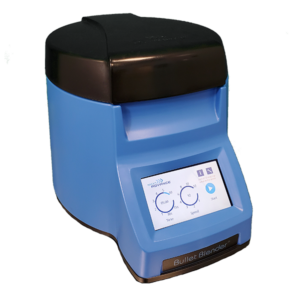
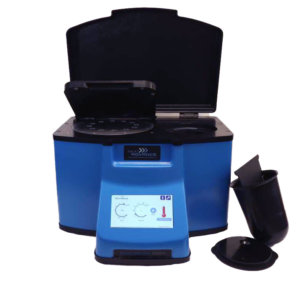
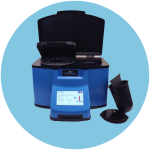
The BULLET BLENDER® enables you to homogenize, disrupt, or lyse up to 24 tissue or cell culture samples at a time. Load the samples into standard polypropylene tubes, then place them in the BULLET BLENDER. The "bullets" in the instrument vigorously strike all of the tubes and homogenize your sample in minutes. NEW! The Bullet Blender is now available with Dry Ice Cooling™ to keep your samples at 4°C!
Homogenize Tissue
Liver, Spleen, Kidney, Brain, Adipose, Bladder, Eye, Thyroid, Gallbladder, Muscle, Pancreas, Testes, Meconium, Thymus, Adrenal gland, Lymph Node
Homogenize Tougher Tissue
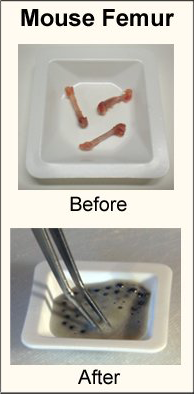
Heart, Aorta, Tumor, Tail Snips, Colon, Lung, Blood Vessel, Trachea, Cartilage, Epithelium, Stomach, Intestine, Larynx, Mouse Femur, Pharynx, Umbilical Cord, Skin, Uterus, Ear, Polyp
Lyse Cells
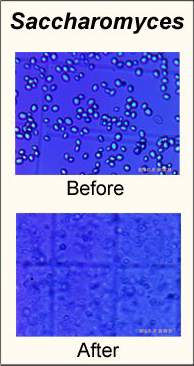
Bacteria, Mammalian cell culture, Yeast
Homogenize Plant Material and Fungi
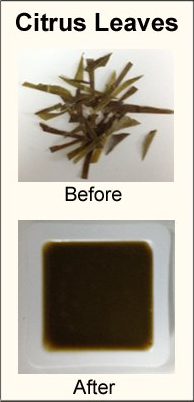
Leaves, Nuts, Roots, Mycelia, Moss, Tuber
Homogenize Small Organisms
Zebrafish, Insects, Nematode, Plankton
Protein Extraction
Aggresome extraction, Activity assays, Chromatin IP, Cytokine Assay, ELISA, HPLC, Immunoassay, Immunoblotting, Immunoprepitation, SDS-PAGE
Nucleotide Extraction
Cloning, PCR, Library generation, Microarray, RT-PCR, qPCR, Sequencing, Forensics applications
Viral Extraction
Plaque assays
Whole Cell Isolation
Bacteria, Lymphocytes, Blood Cells, Stem Cells, Primary Cell Isolation
Organelle Isolation
Nucleus, Mitochondria
Chemical Analysis
HPLC, UPLC, GC-MS, LC-MS, Lipid Extraction, Drug Detection, Forensic Analysis
Nanoparticle Generation
Liposome generation for drug delivery
See some publications referencing the Bullet Blender for these applications.
DNA |
RNA |
Protein |
From plant samples![]() |
From tail snips![]() |
From E. Coli samples ![]() |
|
Genomic DNA samples in agarose gel stained with ethidium bromide
|
Total RNA gel. RNA Integrity Number = 8.5 (thanks to Madhu Prasad @ U. Michigan) |
SDS-PAGE gel stained with Coomassie Blue wc = whole cell sf = soluble fraction Left two lanes control Right two lanes induced |
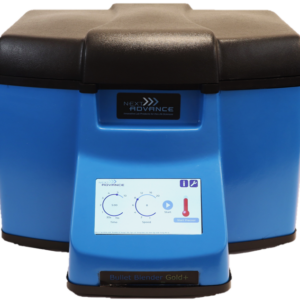
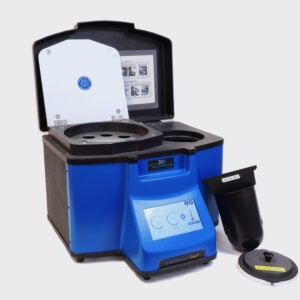
NEW! BB24-AU Bullet Blender® GOLDColder, quieter, and faster homogenization!
BB24-AU Bullet Blender Gold...................................... more info |
|
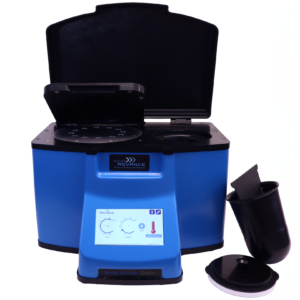
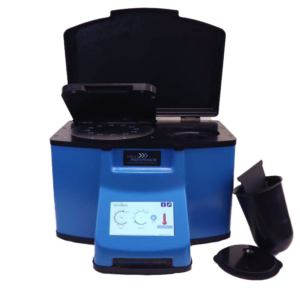
BBY24M Bullet Blender® STORMMore powerful for tough samples!
BBY24M Bullet Blender Storm...................................... more info |
|
|
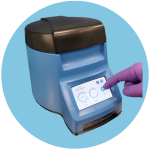
BBX24 Bullet Blender®
Our original Bullet Blender can homogenize up to 24 samples in microcentrifuge tubes. Ideal for samples up to 300mg. Also available with air cooling (blue models) and CE certification. |
BBX24W Bullet Blender® for
Screw-Cap Tubes The Screw-Cap Bullet Blender can homogenize up to 24 samples in screw-cap microcentrifuge tubes. Ideal for samples up to 300mg. Also available with air cooling (blue models) and CE certification. |
|
BB50-DX Bullet Blender® 50 DX
The Bullet Blender 50 DX can homogenize up to 4 tough tissue samples or up to 8 soft samples in 50 mL tubes in parallel. Each tissue sample up to 3.5 g or cell culture combined with beads up to 20 ml. Air cooling included. BB50-DX Bullet Blender 50 DX......... more info
BB50-DX-CE with CE certification..... more info
|
|
The BULLET BLENDER prepares up to 24 samples in just minutes. All of the samples are automatically homogenized in the same manner, with high yields, so there is very little variation from sample to sample. See the Protocols pages for preparation times and speeds.
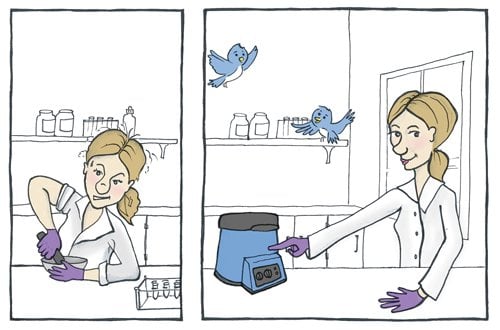
There are no probes or blades to cause cross contamination or sample loss, which also means there are no parts to clean between runs. The sample tubes are kept closed and self-contained during homogenization.
No cool down required. The instrument uses very little power due to the unique, patented design, so there is very little heat build up in the instrument or inside the sample tubes. It uses a small DC motor to agitate the individual tubes. Also, because the motor does not need to agitate any heavy platforms or plates, it is small and will last for years.
Simply place your sample, beads and buffer in standard tubes, and load the tubes into the BULLET BLENDER. Tune the extent of disruption by adjusting the run time and speed. Afterwards, place the sample tubes in a centrifuge to separate the lysate. No special holders are needed. There are no clamp plates nor locking rings to fiddle with.
BULLET BLENDER units come with a 30 day money back guarantee and a 2 year warranty. The simple, reliable design enables the BULLET BLENDER to sell for one half to one fifth the price of ultrasonic or other agitation based instruments, yet provides an easier, quicker, cooler technique.
Gold models of the Bullet Blenders contain a dry ice cooling system. Fill the side compartment with dry ice- when the instrument is running, cold air will circulate through the inside of the instrument and the 4°C signal will light up when the temperature is reached. The air circulation will adjust according to homogenization conditions, allowing the contents of the tube to reach 4°C.
Blue and Storm model Bullet Blenders are equipped with Air Cooling™, which draws air into the Bullet Blender, keeping your samples at ambient temperature. This feature is particularly effective if your samples are sensitive to heat and you are using your Bullet Blender in a refrigerator or a cold room. The Air Cooling™ is also useful for preventing the inside of your Bullet Blender unit from heating up if you are running several consecutive homogenization cycles. Air Cooling™ is an option on the microtube models and standard on the 5 mL and the 50 mL tube models.
Bullet Blenders® come in models for 1.5 - 2.0 mL microcentrifuge tubes, 5 mL sample tubes, and 50 mL sample tubes. Features differentiating the models include extra powerful motors, additional sound insulation, Air Cooling™ which forces ambient air past the sample tubes, and Dry Ice Cooling™ which keeps samples at 4°C within two degrees.
1.5 mL tube models handle up to 24 samples at a time, samples up to 300 mg in mass or up to 300 uL in volume. Uses 1.5 mL Eppendorf® Safe-Lock™ tubes.
The 5 mL tube model handles up to 12 samples at a time, samples up to 1 g or 1 mL in volume. Uses 5 mL polypropylene skirted screw-cap tubes.
50 mL tube models handle up to 8 samples at a time, samples up to 3.5 g in mass or 3.5 mL in volume. Uses 50 mL polypropylene skirted screw-cap tubes.
Air Cooling | Use and Operation
Want to know more about homogenization methods in general? Click here for an overview.
The Air Cooling™ models have devices which exchange air with their surroundings; they do not have refrigeration units. Air Cooling™ effectively draws cold air into the instrument if you are using the Bullet Blender® in a cold room or a refrigerated cabinet. Air Cooling™ is also useful if you're running several sample cycles in a row or if your samples are extra sensitive to heating up. Normally, the samples in the Bullet Blender® only heat up a few degrees and stay quite cool. However, if you're running a second batch of samples soon afterward, they will heat up a little more because the Bullet Blender® is starting out slightly warmer. The Air Cooling™ keeps the Bullet Blender® cooler so that the first batch of samples heat up a little less and subsequent batches are kept just about as cool as the first batch.
The Air Cooling™ feature comes on the "Blue" models: the Bullet Blender® Blue which uses microcentrifuge tubes, the Bullet Blender® Blue 5 which uses 5 mL tubes and the Bullet Blender® Blue 50 which uses 50 mL tubes. Air Cooling™ is also included with the Bullet Blender® Storm.
Before using, please see our General Guidelines for Use
The Bullet Blender is similar to other Bead Mill Style homogenizers in that it processes each sample in its own tube using homogenization beads. Therefore, there is no chance of cross-contamination and there are no parts that need cleaning after each sample. A unique feature of the Bullet Blender is the way it agitates the sample tubes. Other homogenizers vigorously shake the sample tubes. This requires a great deal of energy and these instruments tend to be very large (because of the motor), expensive (many are 2 -3 times the cost of the Bullet Blender) and require cooling cycles due to motor heating - this can take a lot of time away from experiments. The Bullet Blender, on the other hand, uses a patented striking method to agitate tubes. This requires a much smaller motor and generates much less heat. Therefore the Bullet Blender is smaller, lighter, and less expensive than competitor's equipment while working just as well. The Bullet Blender can also be used in a cold room unlike many of the other instruments on the market.
The Bullet Blender® Storm works with 1.5ml Eppendorf® Safe-Lock tubes. The Bullet Blender® and Bullet Blender® Blue work with 1.5 mL, 1.7 mL, and 2.0 mL polypropylene sample tubes, including conical and round bottom microcentrifuge snap-cap tubes. We recommend Eppendorf® Safe-Lock tubes. When using 2ml tubes in the the Bullet Blender® or the Bullet Blender® Blue we recommend using a minimum of 2 tubes per homogenization cycle. The screw cap models use Axygen® and Corning® 1.5 ml screw cap tubes. The Bullet Blender® Blue 5 units work with 5ml Axygen® brand screw top transport tubes. The Bullet Blender 50-DX units work with 50 mL skirted (self-standing) polypropylene tubes, such as Axygen® brand or Corning® brand. The slightly hazy polypropylene tubes are tougher and resist the striking better than the clearer tubes, which might crack at higher speeds. Use high quality tubes, rather than bargain brand tubes which are not as strong.
You can adjust the speed and the duration. Adjusting the speed affects how firmly the balls will strike the sample tubes, while adjusting the duration affects the total number of impacts. Homogenizing tough tissue requires longer durations at full speed, while mixing requires lower speeds.
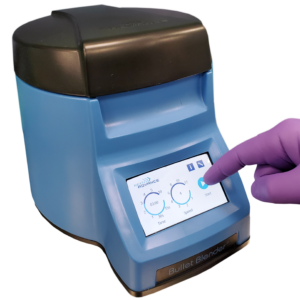
Simply place up to 24 sample tubes in the holders, set the desired duration and speed, and push start. All the samples will be processed simultaneously, without any chance of cross contamination.
For the BBX24 model Bullet Blenders, we recommend using 10-300mg of tissue in a standard microcentrifuge tube. Less than 10mg will work, but it requires careful attention to the amount of beads and volume of homogenization buffer. As with any experiment, errors become larger as the measured quantity gets smaller, so reproducibility becomes an issue. Samples larger than 300mg are not recommended. The air volume inside the tube is critical to allow the sample to be ground up inside the tube, so if the tube is more than 75% full, the efficiency of the homogenization is reduced. The 5 mL tubes can hold up to about 1 g of sample tissue or cultured cells, and a total of 3.5 mL of sample, buffer, and beads combined. The 50 mL tubes can hold up to about 3.5 g of sample tissue or cultured cells, and a total of 20 mL of sample, buffer, and beads combined.
No. There are no restrictions as to which holes to place your sample tubes in, however you may get better results if you space them apart as evenly as possible.
After the Bullet Blender® stops, centrifuge the tubes to clarify the lysate prior to use in your molecular biology applications.
The protocols page contains suggested beads, speeds, and durations for processing many types of tissues and cells. The Bullet Blender®beads page has a bead selection table. The two basic rules for bead selection: (1) use denser beads for tougher samples, and (2) use beads of a comparable size to the size of your samples to maximize the effectiveness of collisions between beads and samples. For example, if you wanted to lyse bacterial cells with a soft membrane, use small glass beads. If you want to homogenize larger pieces of tough tissue, use large steel beads. You can also contact our technical support staff at techsupport@nextadvance.com if you have any questions.
There are several ways that you can increase the homogenization of your samples.

No, the mechanism of action is different from all other homogenizers on the market. Our patented striking technology makes the Bullet Blender both highly efficient and effective. If you use another product's protocol with the Bullet Blender, you are very likely to experience different results. Please use one of our established protocols, or empirically determine a protocol that works best for your samples.
Due to difference in shape, Fisherbrand tubes are more susceptible to wear in the Bullet Blender. We therefore recommend that you avoid using Fisherbrand tubes with the Bullet Blender. If you must use Fisherbrand tubes, do not use them in runs of more than four minutes.
These Bullet Blender models contain larger motors. If all the energy were directed at a single tube, the tube might break. Tubes partly filled with water can be used in place of a tube filled with sample.
It is possible to homogenize tissue that was frozen in liquid nitrogen. Immerse the frozen tissue in cold buffer and allow it to thaw, then treat it as you would any other sample. If the tissue was dried before it was frozen, you can pulverize the tissue by running the tissue with beads only (no buffer), then adding the cold buffer and running again to complete the homogenization. You cannot homogenize "wet" tissue while it is still frozen, as it will effectively be a block of ice and homogenization efficiency will be very poor.
This key switch option incapacitates the electronics, preventing others from operating your Bullet Blender. Thereby, others are discouraged from working in your area, using your supplies, and upsetting your experiments.
Contact us if you have any more questions.
Our experienced staff of molecular biologists have worked to provide you with a set of optimized protocols for the homogenization of various tissue, cell types, and organisms so you can spend less time troubleshooting and more time getting results.
All of our currently available protocols are listed below. Please read the General Guidelines before using the Bullet Blender® in any application.
Types of Samples |
Protocols for microcentrifuge sample tube models |
Protocols for 5 mL sample tube models |
Protocols for 50 mL sample tube models
|
|
Cell Culture
|
|||
|
Animal Tissue
|
Aorta
Bladder Brain Blood Vessel Cancer Tissue (Carcinoma) Cartilage Epithelium Eye Fat / Adipose Femur (mouse) Gallbladder Heart Intestine Kidney Liver Lung/Trachea Lymph Node Meconium Muscle (Striated) Pancreas Pharynx Skin Spleen Stomach / Jejunum Tail Snips Testes Thymus gland Thyroid gland Trachea Umbilical Cord Uterus |
||
|
Plant Tissue
|
Corn | Plant | |
|
Small Organisms
|
|||
|
Extraction of Small Cells
|
|||
|
Protocols for Use with Kits
|
Adobe Acrobat Reader required to view protocols. Click Here to download Adobe PDF Reader
If you need help developing an assay with the Bullet Blender®, feel free to e-mail our tech support at support@NextAdvance.com and we'll do our best to assist you.
If you have developed a protocol with the Bullet Blender that is not listed on this page, or you have developed a protocol that works better for certain applications, please share it with everyone! E-mail it to us at support@NextAdvance.com or send it using our support form and we'll review it and add it to our list of protocols. Don't worry - we'll acknowledge you for it! Thanks!
PLEASE NOTE: The protocols used with the Bullet Blender are different than protocols used with other bead-mill homogenizers. If you previously used another product, please be sure not to use its protocols with the Bullet Blender, as you will very likely experience different results.
Does the protocol use a different kind of bead than the type you currently have? Click here for pricing and ordering.