A Smarter Approach to Sample Lysis
Modern research labs are continually looking for ways to process more samples efficiently, all while maintaining sample quality, and achieve reproducible results across RNA, DNA, protein, organelle and live cell applications. Some homogenizers often struggle to keep up— overheating samples, requiring complex procedures, or slowing workflows with time‑consuming cleanup.
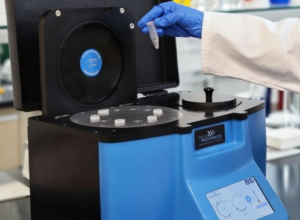
The Bullet Blender was developed as an alternative approach to these challenges. As an advanced, high-performance bead‑mill homogenizer, it delivers:
- Built‑in cooling to protect sensitive biomolecules
- Supports high throughput processing
- Streamlined, simple workflow
- No cross contamination with sealed‑tube processing
These features make it a practical option for molecular biology, genomics, proteomics, and cell biology labs seeking consistent and reproducible lysis.
The Bullet Blender shares the same general concept as other bead‑mill homogenizers—each sample is processed in its own tube with homogenization beads. This ensures:
- No cross‑contamination
- No messy cleanup
- No parts requiring washing between samples
But the Bullet Blender stands apart in several critical ways.
- Unique Striking Technology (Not Shaking)
Most bead‑mill homogenizers rely on vigorous shaking to disrupt samples—a method that demands substantial power and leads to large, energy‑intensive motors, heavy and bulky instrument designs, and significant heat generation that can easily transfer to sensitive samples. Ultimately, these designs lead to higher price points.
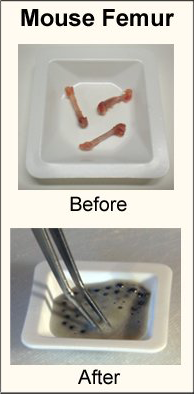
The Bullet Blender uses a different approach: a unique striking technology that rapidly impacts sample tubes, generating three‑dimensional oscillations at frequencies exceeding 100 Hz. This multi‑frequency motion enables efficient homogenization of even the toughest samples, such as mouse femur, algae, fibrous plant material, and more.
The result:
- Highly efficient lysis without overheating
- Faster loading and unloading of samples
- Smaller, lighter instrument footprint
- Lower cost compared to oversized competitors
- Built‑In Convective Cooling (Unique to Bullet Blender)
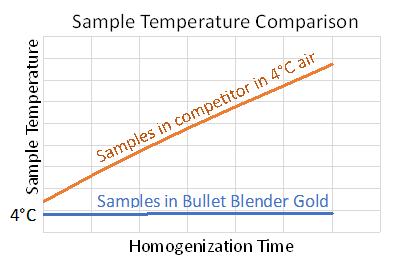
Unlike systems that secure tubes tightly in holders—restricting airflow and trapping heat—the Bullet Blender allows tubes to oscillate freely within a moving air stream.
The Gold+ model incorporates active temperature monitoring and sensor‑driven cooling control to maintain your sample at 4°C. This design eliminates the need for cool‑down pauses, which can be required with most other homogenizers.
This makes the Bullet Blender ideal for RNA, protein, and organelle isolation, as well as enzyme‑sensitive applications.
- Smaller, Lighter, and More Affordable—Without Sacrificing Performance
Because the Bullet Blender does not rely on oversized motors or heavy mechanical assemblies, it remains compact, easy to move, and accessible in terms of cost. Its striking mechanism and airflow design support efficient homogenization without sacrificing performance.
- Broad Application Flexibility Across Sample Types
The Bullet Blender supports a wide range of biological materials, making it adaptable to many different areas of research. It can efficiently process soft samples such as bacteria, cell culture, or nematodes, while also handling much tougher materials—including mouse bone, fibrous plant tissue, and seeds—using appropriate bead and tube combinations. This versatility allows labs to rely on a single homogenization platform across diverse projects without changing instruments. Check out our extensive Bullet Blender protocols page here: Bullet Blender Protocols.
Proven Results
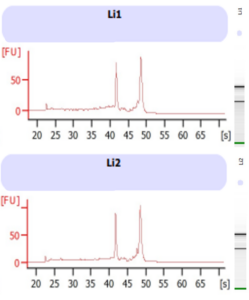
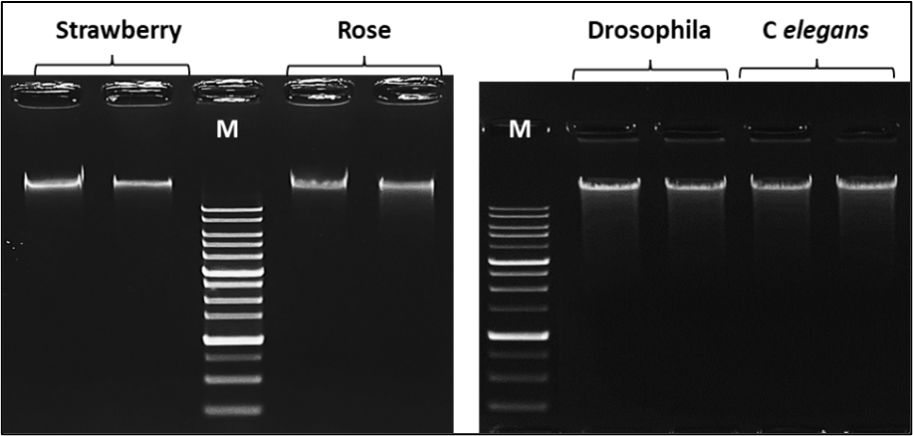
For over 20 years, the Bullet Blender has been used successfully in laboratories around the world, and is cited in thousands of publications. The examples below highlight how effectively the instrument can homogenize animal tissues to isolate temperature‑sensitive molecules such as RNA, producing high‑quality material suitable for downstream analysis. The Bullet Blender also excels with more challenging samples, including tough plant material and small organisms like fruit flies, yielding intact, non‑degraded DNA that appears as thin, well‑defined bands on agarose gels.