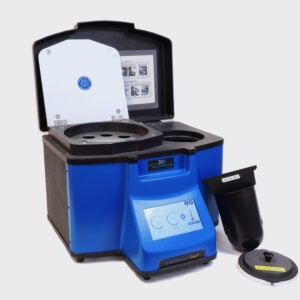
Ideal for Colon Tissue Homogenization
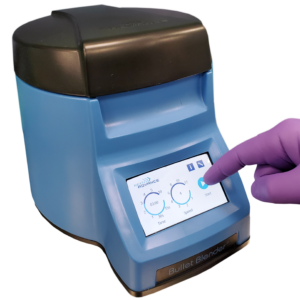
Do you spend lots of time and effort homogenizing colon tissue samples? The Bullet Blender® tissue homogenizer delivers high quality and superior yields. No other homogenizer comes close to delivering the Bullet Blender’s winning combination of top-quality performance and budget-friendly affordability.Â
Save Time, Effort and Get Superior Results with
The Bullet Blender Homogenizer
Consistent and High Yield Results
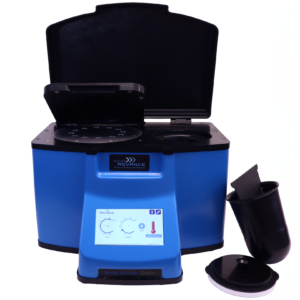
Run up to 24 samples at the same time under microprocessor-controlled conditions, ensuring experimental reproducibility and high yield. Process samples from 10mg or less up to 3.5g.No Cross Contamination
No part of the Bullet Blender ever touches the tissue – the sample tubes are kept closed during homogenization. There are no probes to clean between samples.Samples Stay Cool
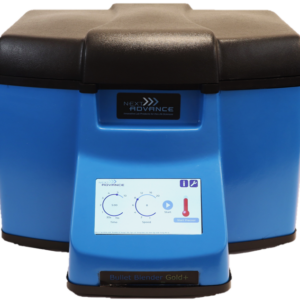
The Bullet Blenders’ innovative and elegant design provides convective cooling of the samples, so they do not heat up more than several degrees. In fact, our Gold+ models hold the sample temperature to about 4ºC.Easy and Convenient to Use
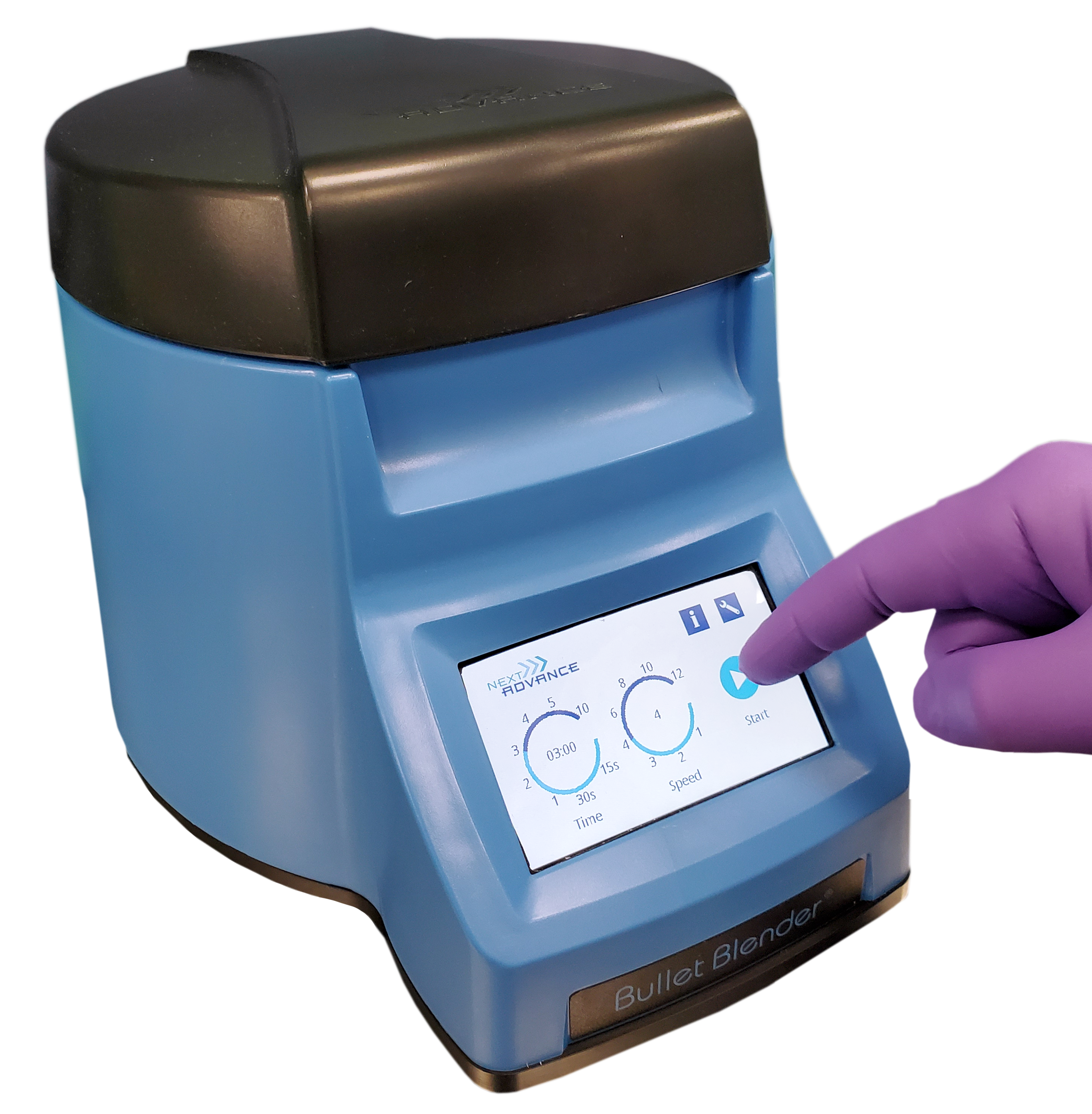
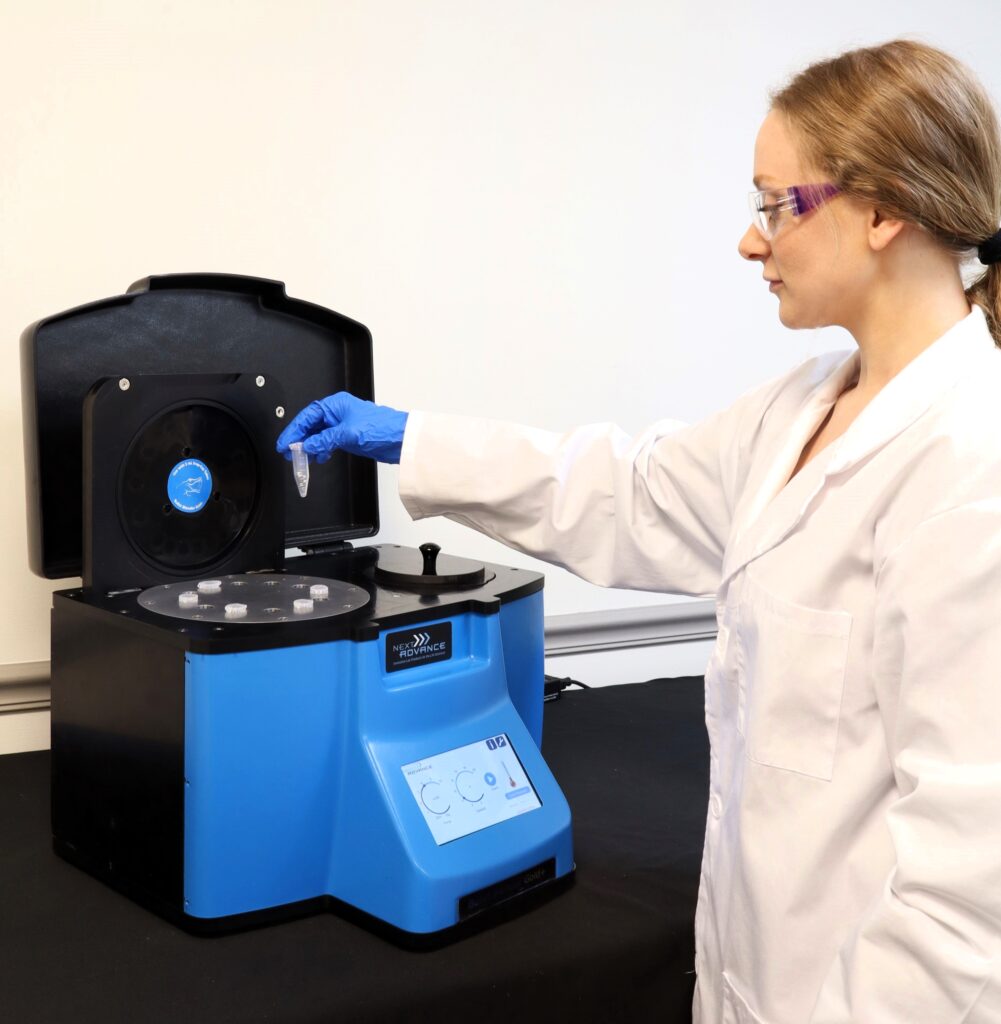
Just place beads and buffer along with your tissue sample in standard tubes, load tubes directly in the Bullet Blender, select time and speed, and press start.Risk Free Purchase
Thousands of peer-reviewed journal articles attest to the consistency and quality of the Bullet Blender homogenizer. We offer a 2 year warranty, extendable to 4 years, because our Bullet Blenders are reliable and last for many years.Intestine Homogenization Protocol
What Else Can You Homogenize? Tough or Soft, No Problem!Â
The Bullet Blender can process a wide range of samples including organ tissue, cell culture, plant tissue, and small organisms. You can homogenize samples as tough as mouse femur or for gentle applications such as tissue dissociation or organelle isolation.
Want more guidance? Need a quote? Contact us:
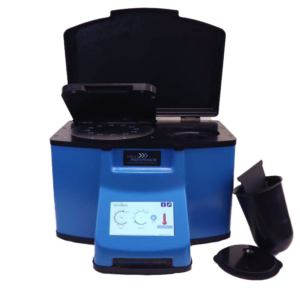
Bullet Blender Models
Select Publications using the Bullet Blender to Homogenize Colon Tissue
Nam, S. H., Kim, D., Lee, M.-S., Lee, D., Kwak, T. K., Kang, M., Ryu, J., Kim, H.-J., Song, H. E., Choi, J., Lee, G.-H., Kim, S.-Y., Park, S. H., Kim, D. G., Kwon, N. H., Kim, T. Y., Thiery, J. P., Kim, S., & Lee, J. W. (2015). Noncanonical roles of membranous lysyl-tRNA synthetase in transducing cell-substrate signaling for invasive dissemination of colon cancer spheroids in 3D collagen I gels. Oncotarget, 6(25), 21655–21674. https://doi.org/10.18632/oncotarget.4130
Penney, R., Lundgreen, A., Yao-Borengasser, A., Edavana, V., Williams, S., Dhakal, I., Wolff, R., Kadlubar, S., & Slattery, M. (2014). CYP19A1 single nucleotide polymorphism associations with CYP19A1, NFκB1, and IL6 gene expression in human normal colon and normal liver samples. Pharmacogenomics and Personalized Medicine, 163. https://doi.org/10.2147/PGPM.S62238
Nugent, J. L., McCoy, A. N., Addamo, C. J., Jia, W., Sandler, R. S., & Keku, T. O. (2014). Altered Tissue Metabolites Correlate with Microbial Dysbiosis in Colorectal Adenomas. Journal of Proteome Research, 13(4), 1921–1929. https://doi.org/10.1021/pr4009783
Slattery, M. L., Lundgreen, A., Mullany, L. E., Penney, R. B., & Wolff, R. K. (2014). Influence of CHIEF pathway genes on gene expression: a pathway approach to functionality. International Journal of Molecular Epidemiology and Genetics, 5(2), 100–111.
León-Cabrera, S., Callejas, B. E., Ledesma-Soto, Y., Coronel, J., Pérez-Plasencia, C., Gutiérrez-Cirlos, E. B., Ávila-Moreno, F., Rodríguez-Sosa, M., Hernández-Pando, R., Marquina-Castillo, B., Chirino, Y. I., & Terrazas, L. I. (2014). Extraintestinal Helminth Infection Reduces the Development of Colitis-Associated Tumorigenesis. International Journal of Biological Sciences, 10(9), 948–956. https://doi.org/10.7150/ijbs.9033
Kadlubar, S., Penney, R., Lundgreen, A., Yao-Borengassar, A., Koroth-Edavana, V., Williams, S., Wolff, R., & Slattery, M. (2013). Lack of correlation between in silico projection of function and quantitative real-time PCR-determined gene expression levels in colon tissue. Pharmacogenomics and Personalized Medicine, 99. https://doi.org/10.2147/PGPM.S49199
Palandra, J., Finelli, A., Zhu, M., Masferrer, J., & Neubert, H. (2013). Highly Specific and Sensitive Measurements of Human and Monkey Interleukin 21 Using Sequential Protein and Tryptic Peptide Immunoaffinity LC-MS/MS. Analytical Chemistry, 85(11), 5522–5529. https://doi.org/10.1021/ac4006765
Saleiro, D., Murillo, G., Benya, R. V., Bissonnette, M., Hart, J., & Mehta, R. G. (2012). Estrogen receptor-β protects against colitis-associated neoplasia in mice. International Journal of Cancer, 131(11), 2553–2561. https://doi.org/10.1002/ijc.27578
Goodrich, K. M., Fundaro, G., Griffin, L. E., Grant, A., Hulver, M. W., Ponder, M. A., & Neilson, A. P. (2012). Chronic administration of dietary grape seed extract increases colonic expression of gut tight junction protein occludin and reduces fecal calprotectin: a secondary analysis of healthy Wistar Furth rats. Nutrition Research, 32(10), 787–794. https://doi.org/10.1016/j.nutres.2012.09.004
Alt, C., Lam, J. S., Harrison, M. T., Kershaw, K. M., Samuelsson, S., Toll, L., & D’Andrea, A. (2012). Nociceptin/orphanin FQ inhibition with SB612111 ameliorates dextran sodium sulfate-induced colitis. European Journal of Pharmacology, 683(1–3), 285–293. https://doi.org/10.1016/j.ejphar.2012.03.014
Bastie, C. C., Gaffney-Stomberg, E., Lee, T.-W. A., Dhima, E., Pessin, J. E., & Augenlicht, L. H. (2012). Dietary Cholecalciferol and Calcium Levels in a Western-Style Defined Rodent Diet Alter Energy Metabolism and Inflammatory Responses in Mice. Journal of Nutrition, 142(5), 859–865. https://doi.org/10.3945/jn.111.149914
McConnell, B. B., Kim, S. S., Yu, K., Ghaleb, A. M., Takeda, N., Manabe, I., Nusrat, A., Nagai, R., & Yang, V. W. (2011). Krüppel-Like Factor 5 Is Important for Maintenance of Crypt Architecture and Barrier Function in Mouse Intestine. Gastroenterology, 141(4), 1302-1313.e6. https://doi.org/10.1053/j.gastro.2011.06.086
Repnik, K., & Potočnik, U. (2010). CTLA4 CT60 Single-Nucleotide Polymorphism Is Associated with Slovenian Inflammatory Bowel Disease Patients and Regulates Expression of CTLA4 Isoforms. DNA and Cell Biology, 29(10), 603–610. https://doi.org/10.1089/dna.2010.1021
McConnell, B. B., Kim, S. S., Bialkowska, A. B., Yu, K., Sitaraman, S. V., & Yang, V. W. (2011). Krüppel-Like Factor 5 Protects Against Dextran Sulfate Sodium−Induced Colonic Injury in Mice by Promoting Epithelial Repair. Gastroenterology, 140(2), 540-549.e2. https://doi.org/10.1053/j.gastro.2010.10.061
Goodrich, K. M., Smithson, A. T., Ickes, A. K., & Neilson, A. P. (2015). Pan-colonic pharmacokinetics of catechins and procyanidins in male Sprague–Dawley rats. The Journal of Nutritional Biochemistry. https://doi.org/10.1016/j.jnutbio.2015.04.008
Repnik, K., & Potočnik, U. (2011). Haplotype in the IBD5 region is associated with refractory Crohn’s disease in Slovenian patients and modulates expression of the SLC22A5 gene. Journal of Gastroenterology, 46(9), 1081–1091. https://doi.org/10.1007/s00535-011-0426-6