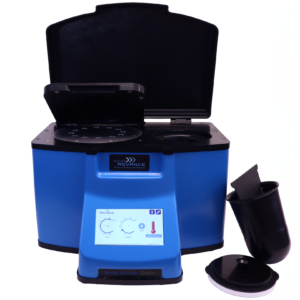
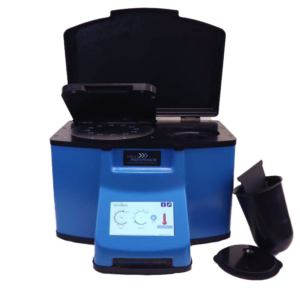
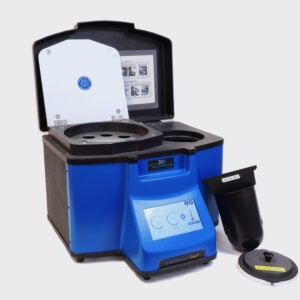
Ideal for Eye Tissue Homogenization
Do you spend lots of time and effort homogenizing eye tissue samples? The Bullet Blender® tissue homogenizer delivers high quality and superior yields. No other homogenizer comes close to delivering the Bullet Blender’s winning combination of top-quality performance and budget-friendly affordability. See below for a eye tissue homogenization protocol.
Save Time, Effort and Get Superior Results with
The Bullet Blender Homogenizer
Consistent and High Yield Results
Run up to 24 samples at the same time under microprocessor-controlled conditions, ensuring experimental reproducibility and high yield. Process samples from 10mg or less up to 3.5g.No Cross Contamination
No part of the Bullet Blender ever touches the tissue – the sample tubes are kept closed during homogenization. There are no probes to clean between samples.Samples Stay Cool
The Bullet Blenders’ innovative and elegant design provides convective cooling of the samples, so they do not heat up more than several degrees. In fact, our Gold+ models hold the sample temperature to about 4ºC.Easy and Convenient to Use
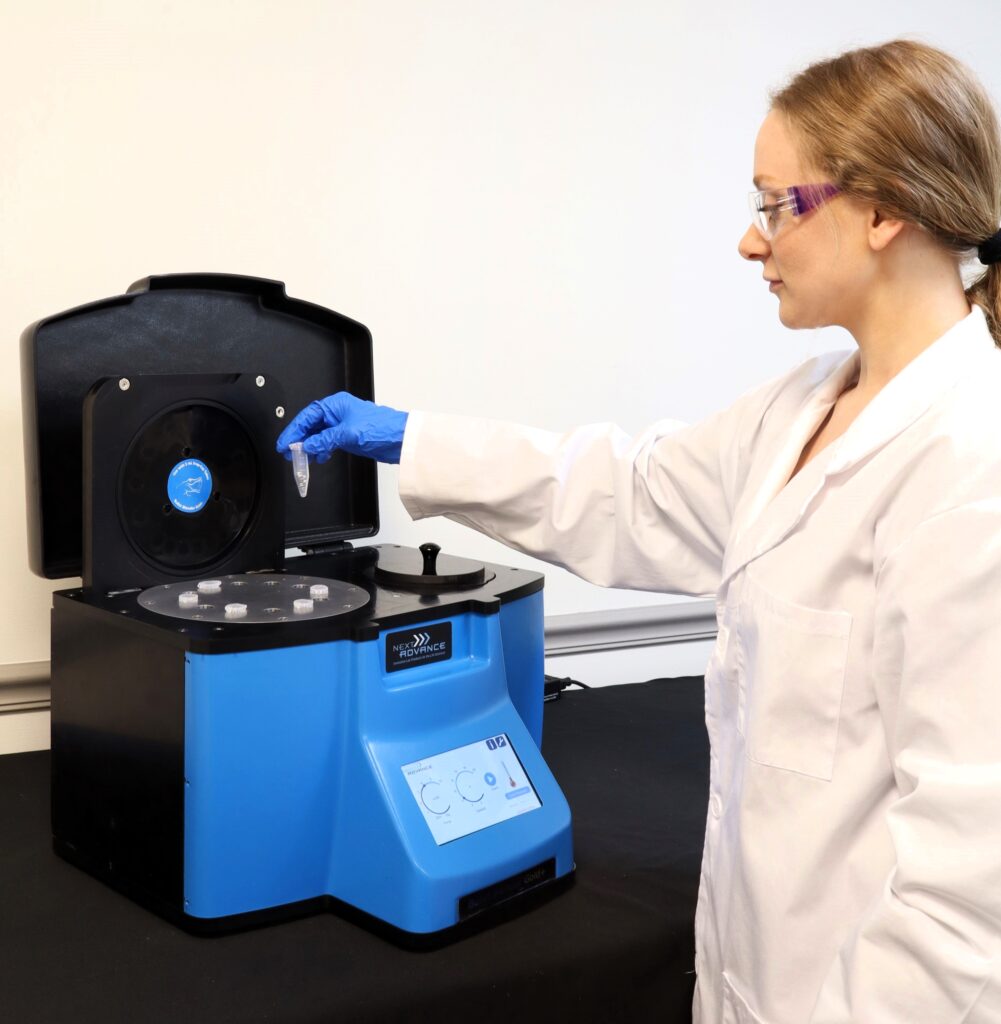
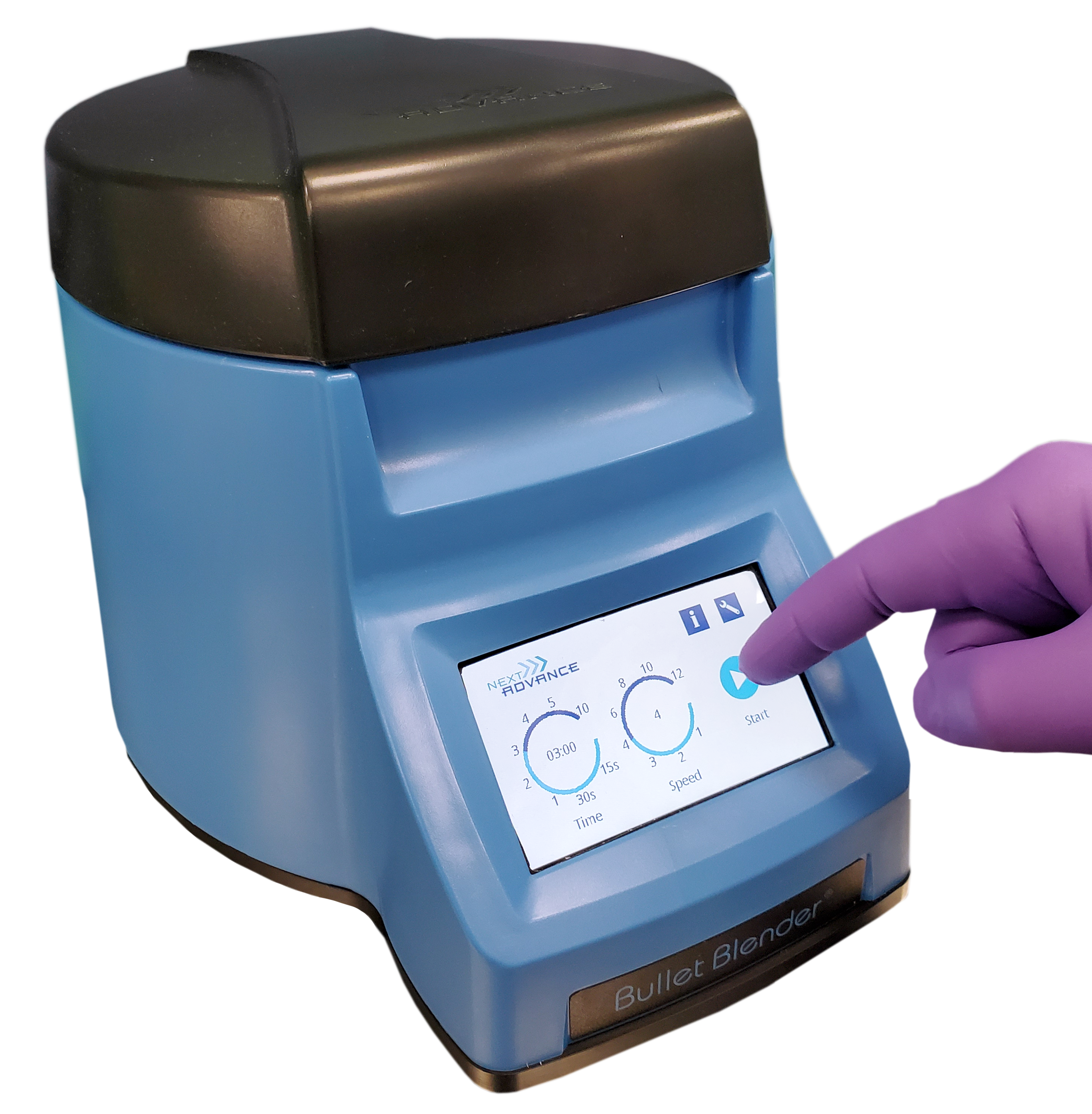
Just place beads and buffer along with your tissue sample in standard tubes, load tubes directly in the Bullet Blender, select time and speed, and press start.Risk Free Purchase
Thousands of peer-reviewed journal articles attest to the consistency and quality of the Bullet Blender homogenizer. We offer a 2 year warranty, extendable to 4 years, because our Bullet Blenders are reliable and last for many years.Eye Tissue Homogenization Protocol
| Sample Tube | Protocol |
|---|---|
| 1.5 mL tubes | 1.5 mL tubes Eye Ball (Cornea/Retina) Protocol |
| 1.5/2 mL tubes using 5 mL adapters | 1.5/2 mL tubes using 5 mL adapters Eye Ball (Cornea/Retina) Protocol |
| 5 mL tubes | 5 mL tubes Eye Ball (Cornea/Retina) Protocol |
What Else Can You Homogenize? Tough or Soft, No Problem!Â
The Bullet Blender can process a wide range of samples including organ tissue, cell culture, plant tissue, and small organisms. You can homogenize samples as tough as mouse femur or for gentle applications such as tissue dissociation or organelle isolation.
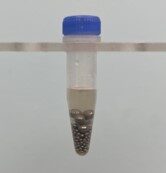
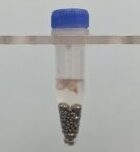
Eye tissue pieces (floating over beads in upper photo) are completely homogenized into the buffer (slightly darker in lower photo).
Want more guidance? Need a quote? Contact us:
Bullet Blender Models
Select Publications using the Bullet Blender to Homogenize Eye Tissue
Jiménez-Loygorri, J. I., Villarejo-Zori, B., Viedma-Poyatos, Á., Zapata-Muñoz, J., Benítez-Fernández, R., Frutos-Lisón, M. D., Tomás-Barberán, F. A., Espín, J. C., Area-Gómez, E., Gomez-Duran, A., & Boya, P. (2024). Mitophagy curtails cytosolic mtDNA-dependent activation of cGAS/STING inflammation during aging. Nature Communications, 15(1), 830. https://doi.org/10.1038/s41467-024-45044-1
Kumari, P., Rothan, H. A., Natekar, J. P., Stone, S., Pathak, H., Strate, P. G., Arora, K., Brinton, M. A., & Kumar, M. (2021). Neuroinvasion and Encephalitis Following Intranasal Inoculation of SARS-CoV-2 in K18-hACE2 Mice. Viruses, 13(1), 132. https://doi.org/10.3390/v13010132
Gooding, S. W., Chrenek, M. A., Ferdous, S., Nickerson, J. M., & Boatright, J. H. (2018). Set screw homogenization of murine ocular tissue, including the whole eye. Molecular Vision, 24, 690–699.
Zhou, Y., Bennett, T. M., & Shiels, A. (2016). Lens ER-stress response during cataract development in Mip-mutant mice. Biochimica et Biophysica Acta (BBA) - Molecular Basis of Disease, 1862(8), 1433–1442. https://doi.org/10.1016/j.bbadis.2016.05.003
Doldur-Balli, F., Ozel, M. N., Gulsuner, S., Tekinay, A. B., Ozcelik, T., Konu, O., & Adams, M. M. (2015). Characterization of a novel zebrafish (Danio rerio) gene, wdr81, associated with cerebellar ataxia, mental retardation and dysequilibrium syndrome (CAMRQ). BMC Neuroscience, 16(1). https://doi.org/10.1186/s12868-015-0229-4
Charbel Issa, P., Barnard, A. R., Herrmann, P., Washington, I., & MacLaren, R. E. (2015). Rescue of the Stargardt phenotype in Abca4 knockout mice through inhibition of vitamin A dimerization. Proceedings of the National Academy of Sciences, 112(27), 8415–8420. https://doi.org/10.1073/pnas.1506960112
Can, N., Catak, O., Turgut, B., Demir, T., Ilhan, N., Kuloglu, T., & Ozercan, I. H. (2015). Neuroprotective and antioxidant effects of ghrelin in an experimental glaucoma model. Drug Design, Development and Therapy, 2819. https://doi.org/10.2147/DDDT.S83067
Eriksson, A., Williams, M. J., Voisin, S., Hansson, I., Krishnan, A., Philippot, G., Yamskova, O., Herisson, F. M., Dnyansagar, R., Moschonis, G., Manios, Y., Chrousos, G. P., Olszewski, P. K., Frediksson, R., & Schiöth, H. B. (2015). Implication of coronin 7 in body weight regulation in humans, mice and flies. BMC Neuroscience, 16(1), 13. https://doi.org/10.1186/s12868-015-0151-9
Patil, H., Saha, A., Senda, E., Cho, K., Haque, M., Yu, M., Qiu, S., Yoon, D., Hao, Y., Peachey, N. S., & Ferreira, P. A. (2014). Selective Impairment of a Subset of Ran-GTP-binding Domains of Ran-binding Protein 2 (Ranbp2) Suffices to Recapitulate the Degeneration of the Retinal Pigment Epithelium (RPE) Triggered by Ranbp2 Ablation. Journal of Biological Chemistry, 289(43), 29767–29789. https://doi.org/10.1074/jbc.M114.586834
Griffith, G. L., Kasus-Jacobi, A., Lerner, M. R., & Pereira, H. A. (2014). Corneal Wound Healing, a Newly Identified Function of CAP37, Is Mediated by Protein Kinase C Delta (PKCδ). Investigative Opthalmology & Visual Science, 55(8), 4886. https://doi.org/10.1167/iovs.14-14461
Lydic, T. A., Busik, J. V., & Reid, G. E. (2014). A monophasic extraction strategy for the simultaneous lipidome analysis of polar and nonpolar retina lipids. The Journal of Lipid Research, 55(8), 1797–1809. https://doi.org/10.1194/jlr.D050302
van der Plas-Duivesteijn, S. J., Mohammed, Y., Dalebout, H., Meijer, A., Botermans, A., Hoogendijk, J. L., Henneman, A. A., Deelder, A. M., Spaink, H. P., & Palmblad, M. (2014). Identifying Proteins in Zebrafish Embryos Using Spectral Libraries Generated from Dissected Adult Organs and Tissues. Journal of Proteome Research, 13(3), 1537–1544. https://doi.org/10.1021/pr4010585
Cho, K. -i., Patil, H., Senda, E., Wang, J., Yi, H., Qiu, S., Yoon, D., Yu, M., Orry, A., Peachey, N. S., & Ferreira, P. A. (2014). Differential Loss of Prolyl Isomerase or Chaperone Activity of Ran-binding Protein 2 (Ranbp2) Unveils Distinct Physiological Roles of Its Cyclophilin Domain in Proteostasis. Journal of Biological Chemistry, 289(8), 4600–4625. https://doi.org/10.1074/jbc.M113.538215
Aung, M. H., Park, H. n., Han, M. K., Obertone, T. S., Abey, J., Aseem, F., Thule, P. M., Iuvone, P. M., & Pardue, M. T. (2014). Dopamine Deficiency Contributes to Early Visual Dysfunction in a Rodent Model of Type 1 Diabetes. Journal of Neuroscience, 34(3), 726–736. https://doi.org/10.1523/JNEUROSCI.3483-13.2014
Cho, K., Haque, M., Wang, J., Yu, M., Hao, Y., Qiu, S., Pillai, I. C. L., Peachey, N. S., & Ferreira, P. A. (2013). Distinct and Atypical Intrinsic and Extrinsic Cell Death Pathways between Photoreceptor Cell Types upon Specific Ablation of Ranbp2 in Cone Photoreceptors. PLoS Genetics, 9(6), e1003555. https://doi.org/10.1371/journal.pgen.1003555
Mihai, D. M., Jiang, H., Blaner, W. S., Romanov, A., & Washington, I. (2013). The retina rapidly incorporates ingested C20-D₃-vitamin A in a swine model. Molecular Vision, 19, 1677–1683.